Someone switched the snow blowers on!

So I’m all snooty about not watching daytime TV but I make “daytime videos” and the biggest excitement in my life over the last three or four days is that someone has switched on many of the snow blowers around me.  Now this is where this could get very boring if you haven’t been infected with the bug of skiing.  If you haven’t you may even be thinking “Does he mean snow ploughs?  But surely he wouldn’t say ‘switched on’ if he did.  Hm, do they use snow blowers like leaf blowers?”  No, I mean things that blast a fine spray of water into the air which, as long as the air is below freezing point and the spray fine enough, will freeze in the air and fall on the ground as artificial snow.  Here you are:

So that’s the little green slope to the south of Aime 2000 seen from the terrace outside our apartment here.  The sun was beaming strongly when I went out to investigate the blowers yesterday but I suspect the air temperature was below zero and being out there in tee shirt wasn’t viable for long once I decide to record these things, a fleece and warm shoes were needed.

That slope is where we step out from the cave des skis in season, clamp on the planks and put hands in the ski pole loops and head off in season.  As you can see it drops away gently to the left and then the whole of the La Plagne domaine opens up for you. As you can see, a fair bit of snow is needed if people are to do that on 15.xii.18 when the season officially opens.  I’m impressed by how much snow the blowers have produced though I think that’s in at least two days of continuous running, day and night.  You can see the three puffs this snow centre left on the big competition pisted dropping down into Plagne Centre. I think those are bigger blowers than these but I could be misremembering.

This, in the video above, is where the cows were not that long ago, 10th of September actually.  Here’s the handheld ‘phone video I shot of them then.

Coming back to yesterday, here’s what zooming in gave me on the blower on the right there.

Sort of soporific to watch for 13 seconds?!  Interesting to see how high above the current ground level the crash padding is now.  I don’t think they rest on the snow in the season, there’s generally a bit of a scalloped out hollow around the bottom of the blowers, but I suspect that a good half metre of snow is needed there.  That blower is blowing onto the area at the end of the little button “lift” that gets people back up that slope and on the turning off “Sue’s run” (our name, you may have guessed) above and to the right, so it’s covering an area that gets a lot of use through the season.  Here are some more short videos of snow blowers in the sun in case, as for me, they’ll do it for you as daytime TV (or anytime TV, vimeo and my blog aren’t fussy about circadian rhythms!)

Sue was, is, a friend who came skiing with us and her children some, hm, many, years ago now. I don’t know how or why that slope got to be “Sue’s run” really. I must consult with the experts in the family with good memories. It’s almost the only skiing return route into Aime 2000 and a bit steep if you’re a complete novice so you can come back along that track on the left.

Here’s the whole of Sue’s run:

Snow blowers going at the bottom and at least three more up on the skyline at the top.  However, not on the run itself as it’s north facing and holding the natural snow it’s already acquired. It’ll need a lot more before it’s skiable though.  Here’s zooming in onto that skyline.

I love the way that was all caught in the low but intense sun. Less than a day later as I type and snow is falling steadily all around and we’re heading into white out.  Off behind the ridge at the top on the right there’s a black run (i.e. the steepest and most challenging of the official “on piste” runs.  “Les coqs”, how could I have forgotten.  I did it with tnp on his snowboard at the end of last season, me on my short skis much more suited to its moguls (mounds of snow up to probably 1.5m high on Les coqs and decidedly challenging, I remember doing a lot of very unambitious side slipping!)  tnp of course, just shot away out of sight making it look like a walk in the park, to choose a tired old cliché.

And finally, swinging back to my left from the terrace.

Hm, those are the same type of snow blowers on the main competition slope down into Plagne Centre. I know there are some other, bigger ones over there too but I think they’re hidden below the ridge, further onto that slope.  There’s pretty good snow cover in the relatively (or completely) sun sheltered slopes beyond, a mixture of on piste runs and off piste.  That’s the peak of les verdons in the distance. Over the top there and you drop down into the “Champagne-en-Vanoise” or just “Vanoise” extension of the La Plagne domaine back where I met up with friends in the summer in very different weather conditions.  OK, steady fine snow falling now and I must get on with work!
 

Being clinically retired but not watching day time TV yet!

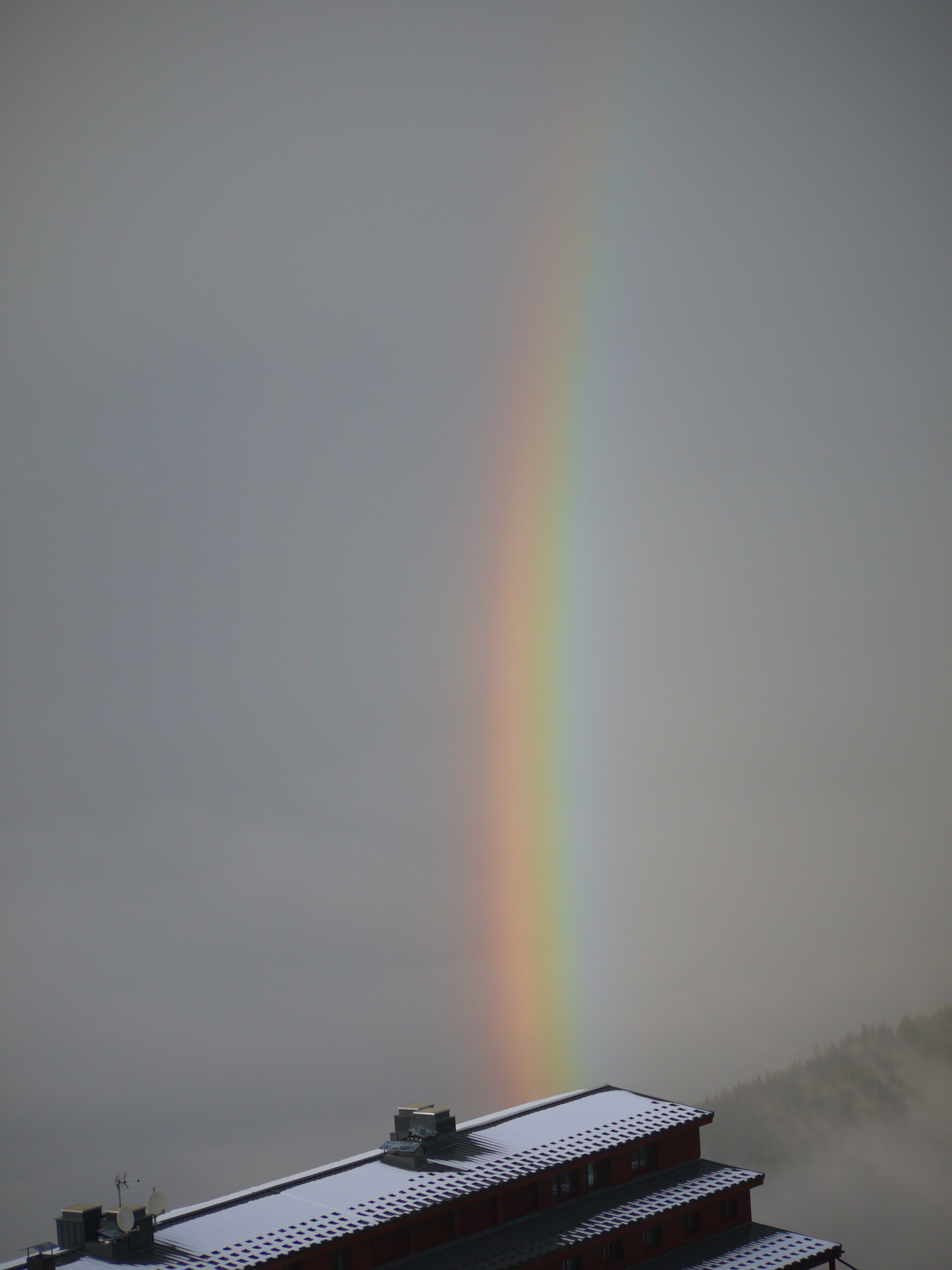
I seem to be nudging forwards with this blog and my public musings again.  Here’s a sign of hope from a week or so back.  A rainbow down below me through snow/sleet.  It was a particularly bright one and a particularly vertical bit of arc.

Rainbow down below from Aime2000 28.x.18

OK. Sorry if that turns out to be the best of this posting!  Onwards though as I think this is a theme that has been running through things ever since that day in July, over two years ago now, when I had renounced my clinical vocation and pointed my bike off towards Compostela: what does it mean to be “clinically retired” or “retired from clinical work”?  What does that mean if you still find yourself working 70-90 hours a week, essentially unpaid as I can live on my NHS pension?  Should I be keeping up with the Kardashians and watching reruns of old TV programs with my feet up?

I confess I’ve watched some old “Lewis” and “Foyle” recently but one or two a week, when too tired to work effectively, is quite enough TV.

I headed into clinical work starting preclinical medicine in 1975 so in some ways I was on a clinical trajectory for 41 years.  I started in psychiatry in 1984 so did that, or parts of it, for 32 years, and though getting formally qualified took eight to 12 years out of that, I was doing some sort of psychotherapy for most of that 32 years.  How does it feel to just stop?  Well, as I’ve said here before, it seems to have left surprisingly little vacuum in my life.  I remember patients and colleagues, mostly with warmth and curiosity about what they are doing now and how they are, but it doesn’t dog me.  I would love to know much more about many, many of the lives that intersected with mine in that very exposed way that being a patient, whether medical, “psychiatric” or for psychotherapy puts one in.  However, it’s not my right to know more than I do.  I have occasional dreams that clearly relate in some way to my clinical work, let’s be honest, they’re always more nightmares than dreams and they’re not that frequent and I think the way they use that part of my past is “steganography”: hiding something else within another image or text.  What Freud thought was the “day residue”/”screen memory” part of dreams.  I’m sure he oversimplified that, and that I’m doing that too, but my clinical years don’t seem to haunt me.

I think a bit of that is because the cycle ride, which started this blog, started a sort of digestion process that is ongoing, in an irregular sort of way.  Though escaping the “cultural jail” of Brexit is real for me, and hoping to gain EU residency rights for my children also real, there’s an element of digesting “retirement” in my retreat up here inot the Alps.  You don’t just walk away from something that was that important to you, and varyingly important, from frustrating and disappointing to really quite helpful to many others, without some work on the change.

For me it’s sort of half a change as most of my clinical years, well, the last 30 of them, I combined clinical work and research work and it’s continuing to be a researcher that keeps me from the Kardashians.  Working around half/half in clinical and research work for 30 years meant that I built up terrible piles (or trenches, pits) of overdue work. For most of the 30 years I was also building up a list not only of started but unfinished things, but of ideas that hadn’t been started in some empirical way.  That’s a lot of unfinished business.  (Ouch, simple artithmetic teases me that it might be 15 years’ worth if I was trying to keep up with full time researchers all those years.  Help!)

Well, the arithmetic isn’t that simple but the dark slag heaps and pits of shame and guilt about overdue, neglected or abandoned collaborations are nasty and will take some years yet to clear, though certainly not 15 years.  The unstarted projects hang there like Tantalus’s grapes but I’m trying very hard to resist them until the worst of the backlog is done.

As I noted a week or so ago (Blog post: What does it mean to be a “clinical researcher” not “researcher” ) the clinical hasn’t gone, it’s there in the research as a connector, running through things and stopping me, I hope, losing the human and the relational in what I do, however abstract some of it may be.  I’ll keep chewing at that here.

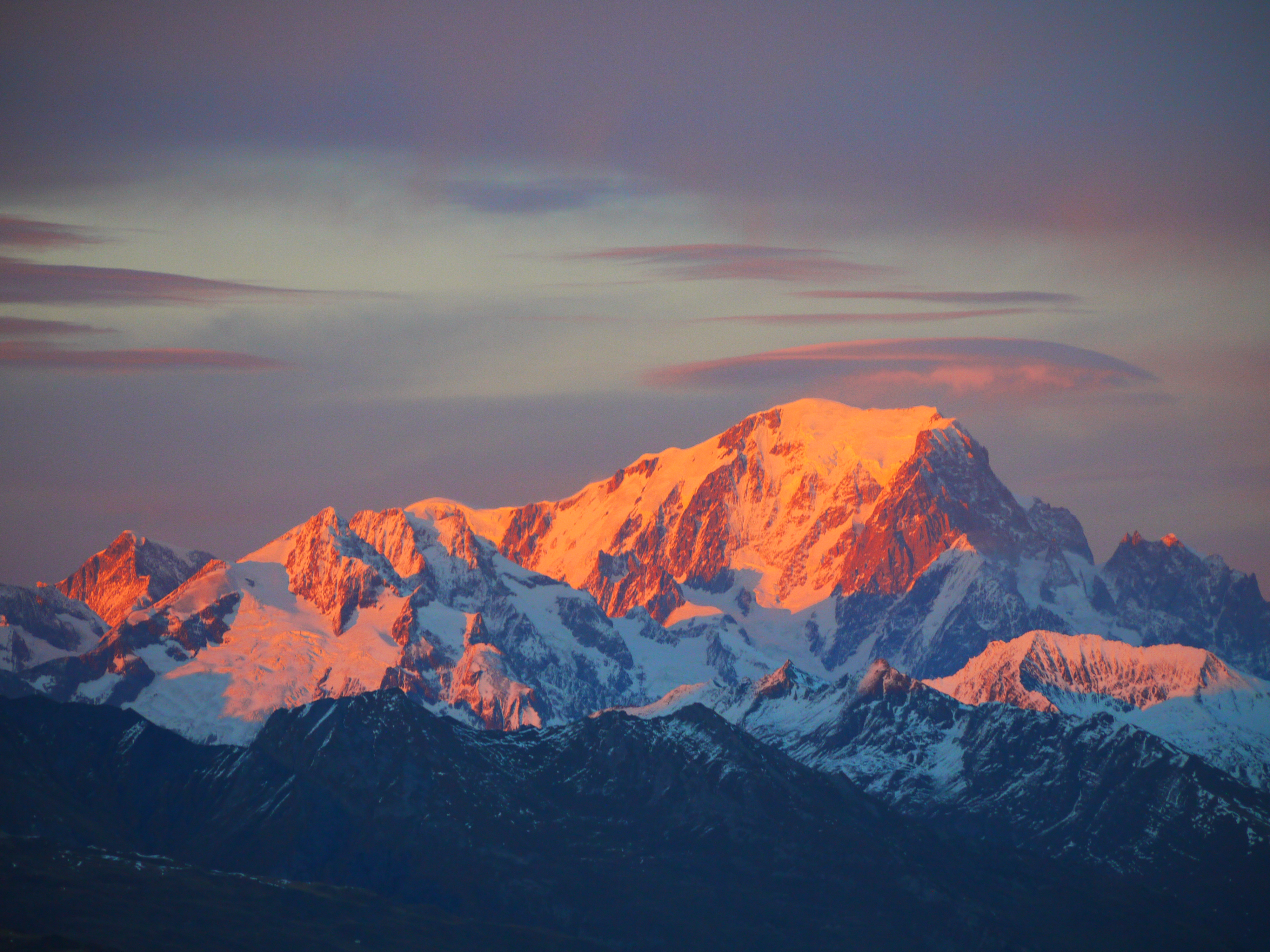
Following on from the promise of that rainbow the other day, here, to sign off with, is the setting sun on Mont Blanc from earlier this evening.

Mont Blanc and lenticular (?) clouds catching the setting sun. Glorious!

What does it mean to be a “clinical researcher” not “researcher”

A few days ago I got this blog going again after a long break with Realising that I’m a (retired clinical) researcher, not an amateur statistician

I guess it’s healthy behaviour for a hermit to reflect on identity and occupation.  So does it matter that I say I’m a “clinical researcher” not simply a “researcher”?  It’s an interesting claim as some of what I do can be very geeky, can seem very abstract.  I’m interested in, and trying to start doing, research that is pure simulation work. Some of my favourite papers have been very mathematical and some of the statistical methods I use are a bit at the “bleeding edge” (that’s mostly a computing joke about things being at the “cutting edge”) so I get responses like “I can’t say I understand it, but feel reassured by your email 🙂 ”  I don’t set out to be unclear or esoteric but some techniques aren’t familiar if they’re not your specialist realm.  I’m not very clever, I have always been hopeless at mental arithmetic, I’m useless at chess, I just find a niche with mathematical ways of trying to see and understand meaningful and generalisable patterns in data.

So I’m a researcher.  Yes!  And it happens that most of my research, all of it really, has been in the general area of clinical work, starting off back in the 80s in medicine and community medicine or public health medicine, and moving into psychiatry, mental health, psychotherapy and counselling.

However, when I say I’m a clinical researcher I am mean that I want my work to have a line from human interactions in which someone, or some group of people want help with something, through the data and back to that situation.  I can really enjoy playing around with the abstractions that help us with the data in the middle of that loop from the clinical encounter back to it, but I want to remember that the data isn’t “natural sciences” data, it  starts out in humans and human relationships, and it must go back to to that.

For me that means that findings are always approximate, our models are always simplifications, often gross simplifications, their generalisability will always been limited and limited in many ways: to particular social groups, to particular cultures or languages, often to particular periods of time, particular services.  That can feel frustrating when we want certainties and control, perhaps deeply frightening when the “clinical” is about pain, suffering, disability and that death will come for all of us.  Of course, faced with these things, we want, science, we want medicine, we want psychology, to have answers, hard answers, certainties.  Surely if we can make planes fly, get humans into space and on the moon, we can have certainties. Sadly, I am sure the true clinical researcher’s answer to that is “no”, “no, sorry, we really can’t”.  Sadly, I think the rewards in our society for pretending otherwise are huge and their effects toxic.  I think I had an easier time being my sort of clinical researcher starting out in the 80s than I would have now.  The career path I had of combining clinical work and research in roughly 50:50 proportions wasn’t easy but it was there if you went for it.  Now it’s pretty much gone at least in the UK and I think, most of the developed world.

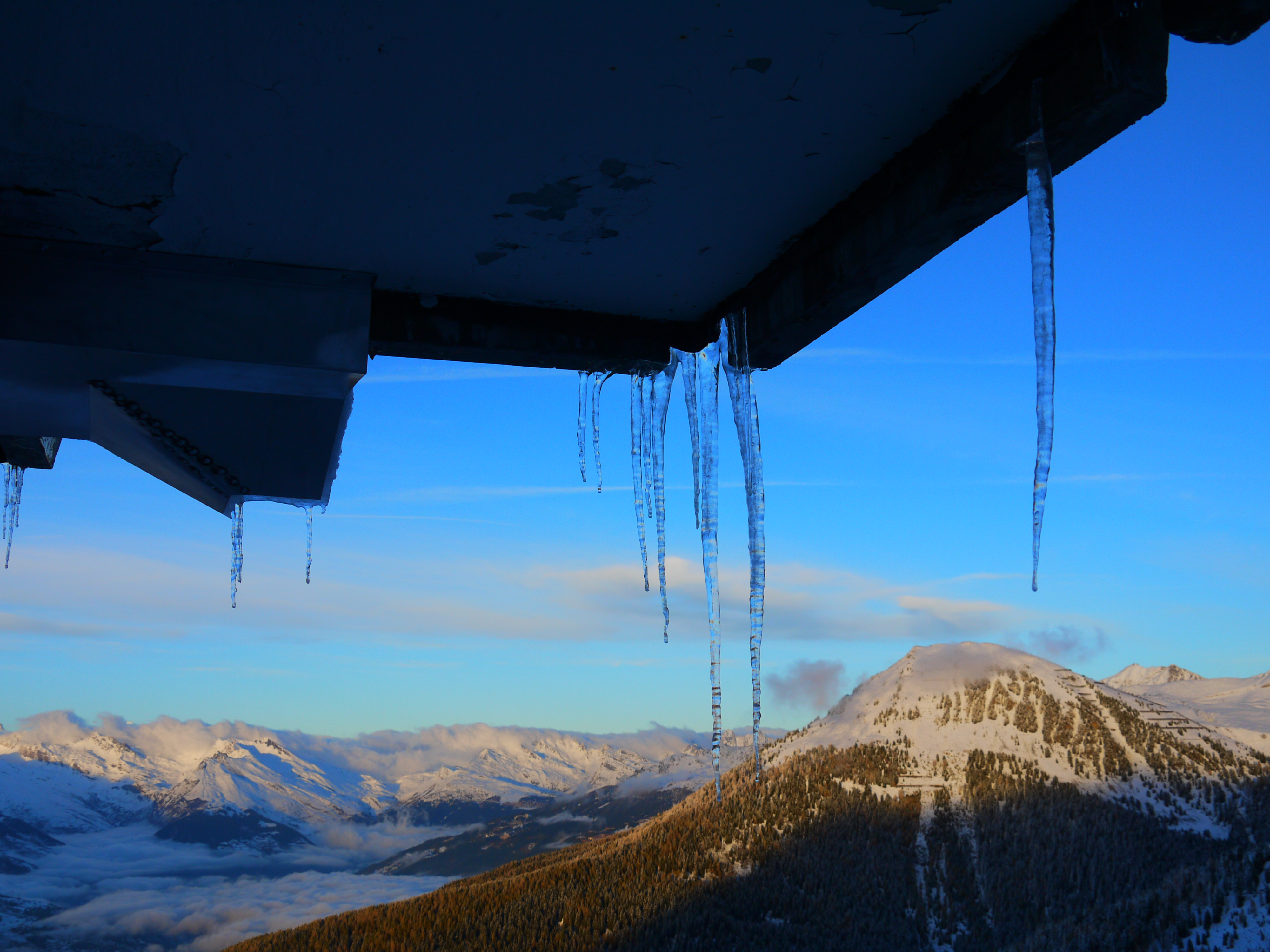
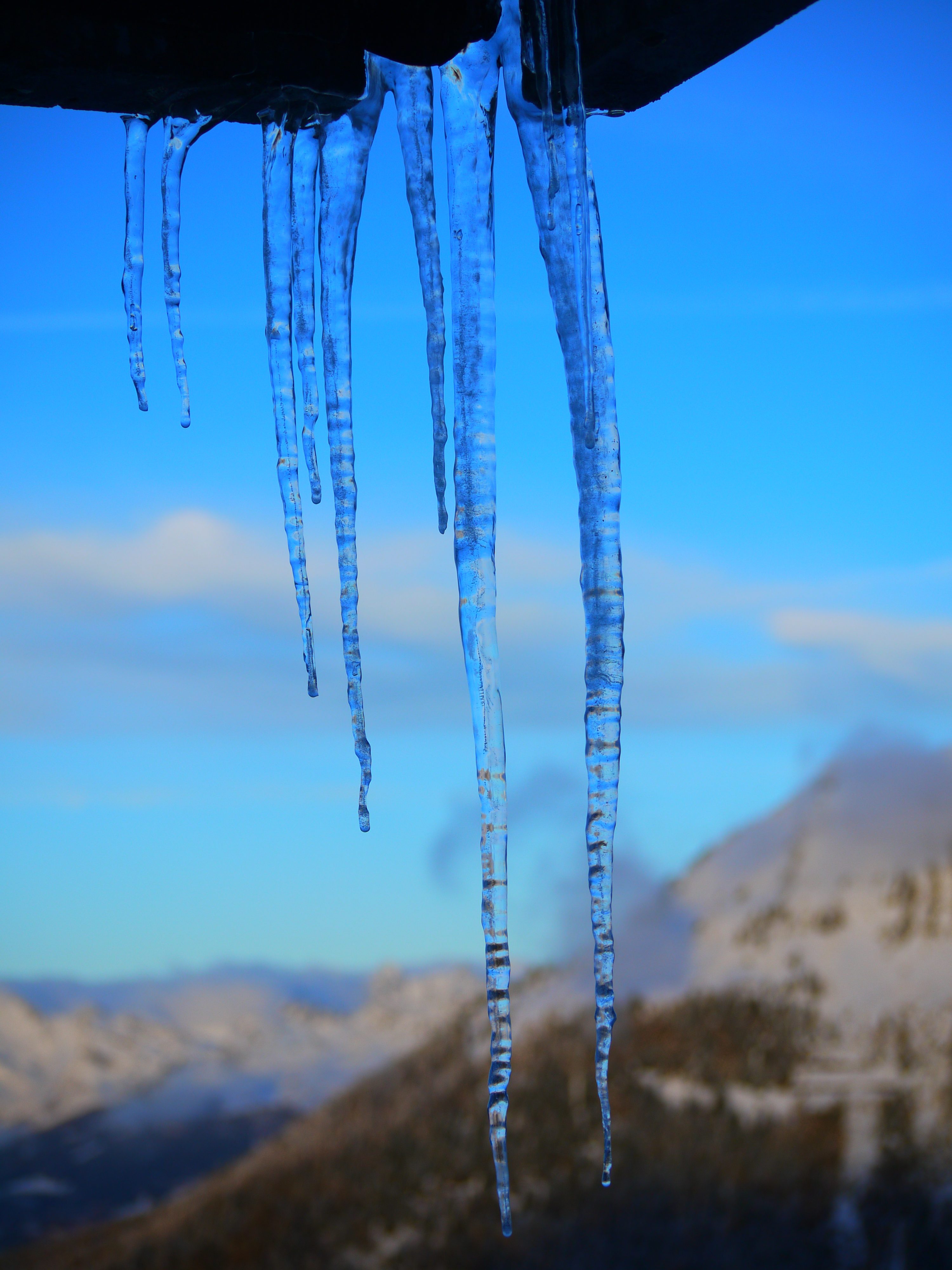
On this chilly theme, some more icicles.

Icicles and the view behind from the terrace in Aime2000 30.x.18.
Icicles from the terrace in Aime2000 30.x.18.

And here was pretty much all of today’s daylight hours condensed into 2 minutes and 46 seconds.  Now here’s both chaos and pattern.

Watching clouds, weather and snow

It’s quite an isolated life up here but there are many compensations.  One is that I spend most of my days working at the kitchen table in the dining room/kitchen of our apartment here.  I’ve moved the table to the window which looks out almost due north (1°, i.e. just E of N according to my ‘phone but I don’t trust it!) That means I look up the valley down below that joins Aime la Plagne to Bourg Saint Maurice and to Mont Blanc towering over everything.  The view is sensational and always changing.  At times there is no view as cloud can descend and wrap the place in white out, at other times Mont Blanc is crystal clear (I must find out how far away it is).

Soon after I first came up here I got into the rhythm of taking a ‘photo using my UK ‘phone pretty much on the hour every hour I was here, using a fixed point on the window to hold the view steady.  One day I will stitch them into some hugely accelerated time lapse film.  However, a few days ago I had one of those whims to which I’m prone:

“What if I used one of the android timelapse apps with my old ‘phone to grab something smoother?”

Well, of course it’s taken a bit of fiddling around and experimenting but I like the results I’m getting now.  So here is the first usable clip.  From Wednesday last week (31st of October, 2018).  Courtesy of a battered Sony Xperia ‘phone and FrameLapse Pro from Neximo labs and served by vimeo.

I really like the way that shows how the high clouds are moving in one wind system (low jetstream?) and the lower clouds are moving in another that is being blown pretty much at right angles to the higher one.

Here’s the following day with pretty much all the daylight hours this time.

Then the second was the most snow and white out since I started this game. I love the vortices coming up from the apartment block immediately below on the left.  I’ve never seen them in real time but they’re just below my sightline so perhaps they’re perfectly visible if I were just a bit higher up.


OK.  Enough.  More on my vimeo pages at https://vimeo.com/cpsyctc and, as with most of creations, work or play, unless I have to hand them over to a moneygrabbing publisher, these are free to reuse subject only to the Creative Commons Attribution-ShareAlike 4.0 International License Creative Commons Attribution-ShareAlike 4.0 International License.

[Added 11.xi.18: The videos now appear in my public diary: https://www.psyctc.org/pelerinage2016/ecwd_calendar/calendar/ and I have a page listing them: https://www.psyctc.org/pelerinage2016/timelapse-videos/]

Realising that I’m a (retired clinical) researcher, not an amateur statistician

Wow, it’s been over three months since I last posted anything.  That reflects that I’ve been, mostly, working very damn hard and ending my days with little energy or time for a blog.  However, this won’t do!

It’s been another long day and I’m tired and do need to sleep but I think this can be a short post and I think the reflection (in the title line of this post), was quite an interesting one, to me at least.

To begin at the beginning: I think I had two lectures on statistics as preclinical medical student and that’s the total of the formal teaching I’ve had on the subject. However, a huge proportion of the long hours I working at the moment are doing number crunching: statistics and psychometrics. Over the last 33 years in which I’ve been doing research, I did the number work on virtually all the papers I’ve co-authored and the majority of my papers, a not too shabby 132 peer-reviewed ones now, have been quantitative.  Now that I’m no longer spending 40-60% of my week doing clinical work, I could be mistaken for a statistician, though I’ve always been very careful to say that I’m only an amateur at that game out of respect for anyone who is properly qualified and registered with one of the organisations like the UK’s Royal Statistical Society.

Earlier this week I was having a work zoom session with someone about a possible collaboration.  I’ve become very wary about what I agree to do these days and will only do the statistics for a piece of work if I have pretty total control over how that bit of the work is done and a full say in how the findings are interpreted in the discussion part of the paper.  It’s that last bit that’s got me the revelation about my identity. It’s also that bit of my insistence on how I work with people that is sometimes tricky, as I tend to be very against any overstating of things or any minimising of the caveats and concerns.

In the conversation I heard myself say “that’s because I’m really a researcher not a statistician” and it echoed in my head as having been more true and more important than I’d realised as I said it.

Statisticians don’t like it, but too often they don’t get a say in the design of a paper.  However, in my limited experience of working with professional statisticians, I think they’re often quite happy not having much or anything to do with the discussion, except perhaps an initial translation of the findings into words rather than graphs and tables.  Even that translation is often kept entirely in the results section of a paper.

What I realised was that I really want to be involved in the complete sequence that should be the skeleton of any quantitative paper:

  1. Agreed, explicit aims/objectives that drive the …
  2. … sampling design and data collection which is is part of, and congruent with …
  3. … the plan of analysis, defined “a priori“, i.e. before seeing the data and including a “stopping rule” also defined a priori so you can show you didn’t keep looking at your accumulating data until it, perhaps by chance, said what you wanted it to say, or just seemed to say something interesting (not necessarily a fetishised “statistical power calculation” but a definite and sensible stopping rule) and then ..
  4. … the actual analyses, saying clearly when some analysis wasn’t part of the a priori plan but was a sensible pursuit of more clarity around something emergent in the data that you hadn’t expected, so much so that you hadn’t planned for it in your plan of analyses, all this leading into …
  5. … a discussion, with caveats, perhaps some “conclusions” and perhaps some implications for the subject area, in the case of my research, for clinical practice or  the ways we research it.

I really do love the mathematical bit in items 3 and 4 of that sequence, however, what really motivates me is know I had a part in, and a responsibility for, trying to make the whole sequence as honest and as useful as possible.

My life would be simpler were I happy to confine myself to items 3 and 4 … but I’m not.

Some other night.  I think this might lead me to write about “American football numbers” (the ones on the players backs, not the incredible plethora of numbers that the game uses and sometimes calls “statistics”).  I think I should also link this “researcher not statistician” issue with the similar “clinical researcher not researcher” issue; that, for me, isn’t just about my topic area or focus.  Oh dear, I can see that leads to one theme I’ve being processing for over two years now in this very erratic blog: how the “clinically retired” collides with the “clinical researcher”.  But enough for now, as I think I often finish up here:  “To sleep, perchance to dream!” Oh aye there is a rub but also lovely link back to one of the great statistical quote of all times:
To consult the statistician after an experiment is finished is often merely to ask him to conduct a post mortem examination. He can perhaps say what the experiment died of.
Ronald Fisher. Presidential Address to the First Indian Statistical Congress, 1938. Sankhya 4, 14-17. [https://en.wikiquote.org/wiki/Ronald_Fisher].

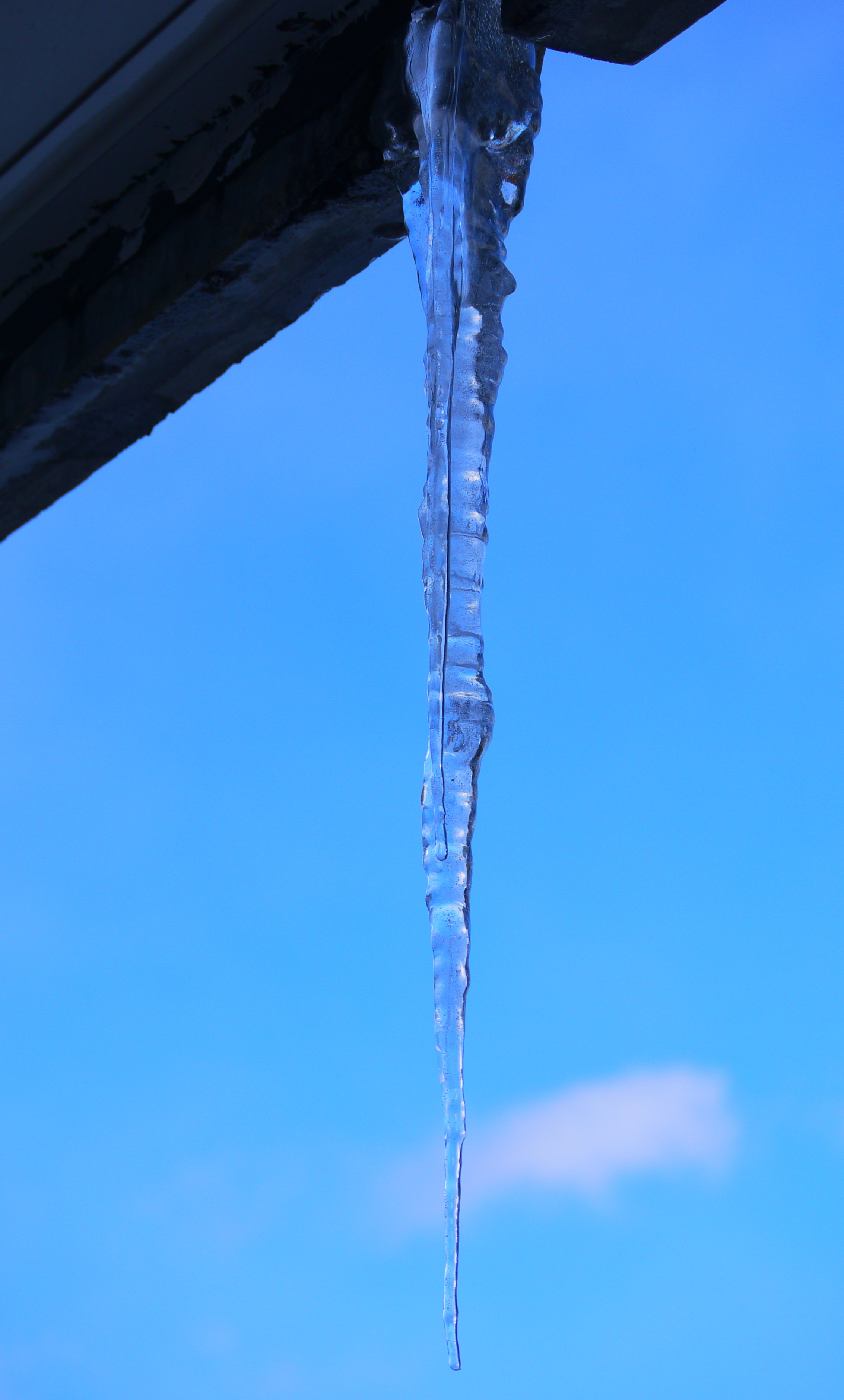
[Added 6.xi.18.  This was a bit dry so here’s an icicle for visual amusement; and I have followed on to What does it mean to be a “clinical researcher” not “researcher” .]

Icicle outside the window in Aime2000 31st October 2018